




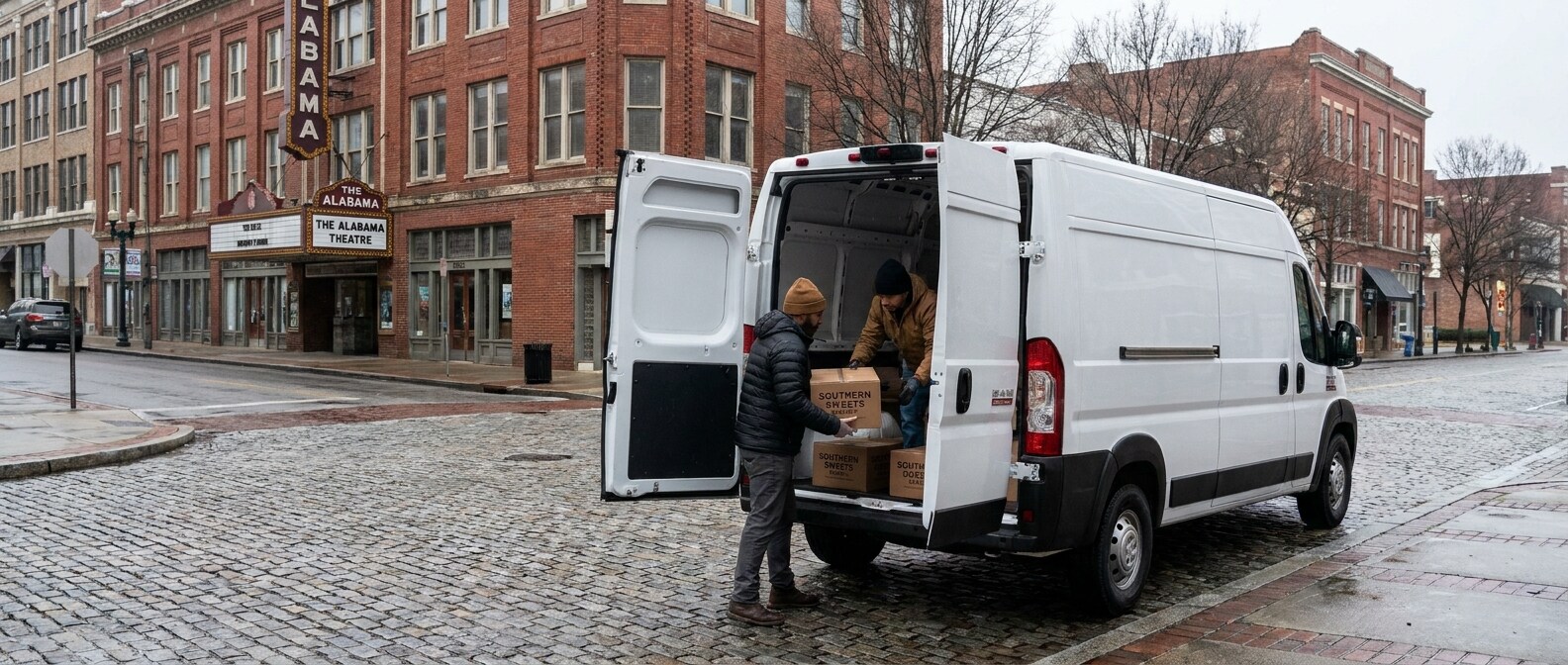
A squeal on a downhill stop. The van pulling sluggishly away from an intersection with a full load. A brake pedal that feels just a little softer than it did in October. None of that is random. You're watching a working van do exactly what a working van does under sustained heavy use, and it shows up right when Birmingham's retailers and bakers need the van most.
The bottom line is that a holiday delivery schedule compresses months of normal brake and tire wear into six weeks, and the ProMaster's front-wheel-drive layout means that wear concentrates entirely on the front axle, which is handling steering, braking, and power delivery all at once.
Get the van inspected before your routes intensify and you'll head into December with one fewer variable to manage. Skip it, and those symptoms only get louder. No mystery to it.
What's Actually Going On With Your Van?
The symptoms your ProMaster shows in mid-November are almost always traceable to one of four sources: front brake wear from stop-and-go loading, front-tire pressure drop from cooler overnight temperatures, payload weight approaching the axle's rated limit, or some combination of all three happening at once. The table below maps what you're noticing to its likely cause and what it means for your next move.
| Symptom You Notice | Likely Cause | Urgency | What to Do |
|---|---|---|---|
| Squeal or chirp on downhill stops | Front brake pads worn to indicator tabs | High | Schedule brake inspection now |
| Longer stopping distance with a full load | Pads and rotors both worn; heat buildup | High | Inspect pads and rotors; check brake fluid |
| Sluggish pull from intersections | Front tires underinflated (cold weather pressure drop) | Moderate | Check and correct tire pressure to door-placard spec |
| Steering feels vague or pulls slightly | Front tires uneven or underinflated; front suspension wear | Moderate | Tire inspection and rotation; check alignment |
| Van feels "heavy" even before you load it | Payload approaching rated limit from upfit additions | Low-Moderate | Recheck actual load weight against rated payload |
| Brake pedal noticeably softer | Brake fluid absorbing moisture; possible pad fade | High | Brake fluid flush; full brake inspection |
The Front Axle Is Doing Three Jobs at Once
The 2026 Ram ProMaster runs front-wheel drive, and that layout is genuinely useful here, giving the van its 21.4-inch load floor height, a flat cargo box floor with no driveshaft tunnel eating into your space, and a 36-foot curb-to-curb turning diameter on downtown Birmingham streets. When you're threading a fully loaded van through the BJCC district or making a tight turn at Pepper Place for a Saturday market drop, that turning radius earns its keep. The BJCC sits in downtown Birmingham.
The tradeoff shows up under load. Because the ProMaster is FWD, the front axle is simultaneously steering the van, delivering power to the pavement, and doing the majority of the braking work. Ram rates the 2026 ProMaster Cargo Van at up to 4,820 pounds of maximum payload. Run anywhere near that weight on a stop-and-go Birmingham delivery route, and your front brake pads and front tires feel every stop. Add Birmingham's grades, and "every stop" means every stop with extra heat in the system.
What we see when ProMasters come in after a heavy November is front pad wear that's ahead of schedule relative to the mileage on the van. It tracks. The front disc brakes are carrying load that gets distributed more evenly on a rear-wheel-drive platform. That's not a complaint about the design; it's just the physics of the layout, and it's exactly why checking brakes before peak volume is more valuable than checking them after.
Financing a new ProMaster is worth exploring if yours is high-mileage heading into this season, but for most Birmingham operators running a 2024 or newer van, the right answer is an inspection, not a replacement.
What You Can Handle Yourself and What Needs a Service Bay
Some of this you can manage between stops. Tire pressure is the clearest example. The 2026 ProMaster runs LT225/75R16 tires, and Birmingham mornings in November are running noticeably cooler than October. Tire pressure drops roughly one PSI for every 10-degree Fahrenheit drop in ambient temperature. If you inflated the tires on a warm afternoon, check them again on a cold morning before a loaded run, and inflate to the spec on your door placard rather than the max on the tire sidewall.
What you can't do at the curb is assess brake pad thickness, rotor wear, or brake fluid condition. Those need a lift, a micrometer, and a trained set of eyes. Ram's maintenance schedule calls for brake pad inspection at every oil change, and for vans running commercial-duty stop-and-go routes, a fleet maintenance guide puts rear pad replacement common around 30,000 to 60,000 miles, though front pads on FWD delivery vans often see heavier wear than that interval suggests.
The 2026 ProMaster also ships with a 10,000-mile oil change interval using synthetic oil on the 1500 and an 8,000-mile interval on the 2500 and 3500. If you're behind on that, do it before December. Fresh oil and a simultaneous brake check at the same visit is the most efficient use of your time right now.
The DIY line comes down to tire pressure, visual checks for obvious leaks, and keeping your load within the rated payload. Everything with a wrench or a lift belongs to a qualified technician. Calling us early always beats calling from the roadside with a loaded van.
Two Questions We Hear From Birmingham ProMaster Operators
How much payload can I actually run in my ProMaster without stressing the brakes?
Ram rates the 2026 ProMaster Cargo Van at up to 4,820 pounds of maximum payload on properly equipped models, with the actual rating varying by wheelbase and roof configuration. That number is the rated ceiling, not a daily target. Running your van at or near its maximum payload on a multi-stop route with frequent braking puts real thermal stress on the front disc brakes. For daily delivery use, our service team recommends knowing your actual load weight and staying within the rated limit printed on your driver's door placard rather than estimating. If you've added shelving, refrigeration, or other upfit equipment, that hardware counts against your payload budget before a single package goes in.
Does Birmingham's hilly terrain actually make brake wear worse on a ProMaster?
It does, in a straightforward way. Grade changes increase the braking force needed to manage speed on descents, and they put more thermal load into the pads and rotors per stop than flat-surface driving would. Birmingham's topography, particularly the grade changes along the Red Mountain corridor and the elevation shifts on downtown's approach streets, means a loaded ProMaster running multiple daily stops here works its front brakes harder than the same van would on a flat Gulf Coast delivery route. None of that argues against the van. It's a reason to stay ahead of inspections rather than reactive about them.